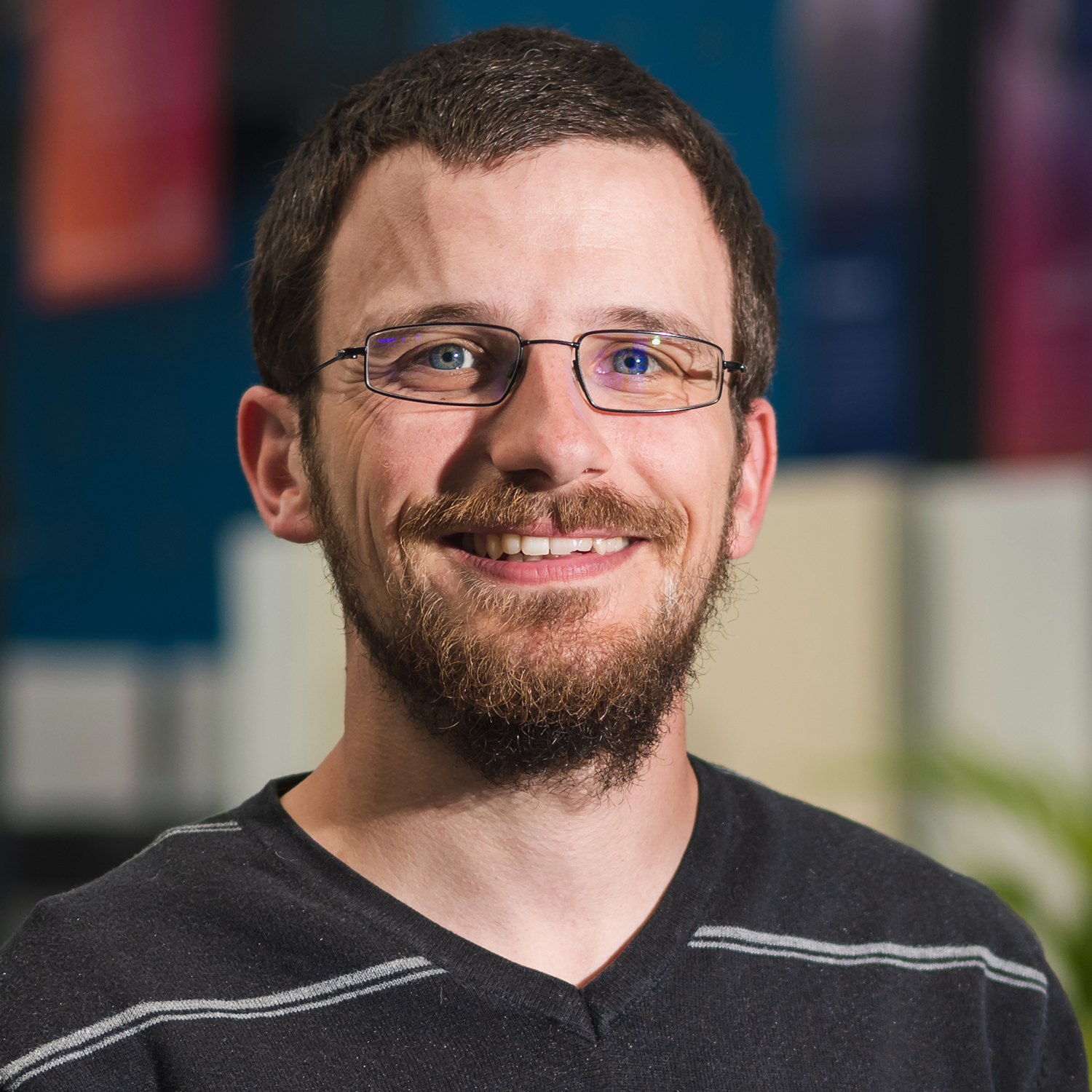
Jacky Bourgeois
I am Assistant Professor of Data-Centric Design with the Department of Sustainable Design Engineering of the Faculty of Industrial Design Engineering of the Delft University of Technology. I direct the Data-Centric Design Lab and head the research section Knowledge and Intelligence Design. I am also a Visiting Fellow at The Open University, where I completed my PhD.
My research is about intimate data commons: small, collaborative data spaces where a group of people bring together the personal data they generate about their bodies, homes, work and neighbourhoods, and act on it towards a shared goal. Think of a family navigating a parent’s metabolic disease combines blood values with personal stories to make sense of what is happening. But also a team of nurses investigating the ward noise that causes fatigue brings their experiences alongside sound measurements to find out which disruptions affect whom, and why.
Today’s data commons are mostly built as cloud infrastructure that protects privacy by anonymising data at scale. That delivers the technical half of a commons and leaves the social half unaddressed: how a group interprets data together, the rules it negotiates about who sees what and for what purpose, and the way value flows back to its members. This social half cannot be engineered or regulated into existence. It has to be designed, with the communities who will live with it.
Data-Centric Design
Data-Centric Design places data at the centre of a contextual, subjective inquiry and commits to three principles, each of which defines one line of my research.
- Participation: who interprets? The people who generate data should shape how it is interpreted, not merely consent to its use. I study collective sensemaking: how groups interpret shared personal data together, so that lived experience is part of the analysis rather than something added afterwards.
- Reflexivity: who decides? The power embedded in data practices should be surfaced and negotiated, not hidden behind claims of neutrality. I study negotiated consent and governance: how the rules of a commons can be set and revisited by its members as their relationships and circumstances change.
- Circularity: who benefits? Data should keep serving the people who generated it, rather than being extracted once and discarded. I study reciprocal value: what makes data exchange feel reciprocal rather than extractive, and which mechanisms actually return value to contributors over time.
I work at the intersection of Human-Computer Interaction, Human-Data Interaction and Human-Centred Design, mostly through research-through-design: I build prototypes and deploy them in people’s own context, using data probes, interviews and workshops with participants’ own data, over long periods when possible.
Current Research Projects
- D3C (NWO, 2025–2027): a data commons for cooperative consultancy, with Design & Publics, the Afrikaanderwijk Coöperatie and the Municipality of Rotterdam. Citizens act as local researchers who govern and benefit from their own data.
- PROMISE (KWF, 2023–2027): putting people with cancer in the lead of remote monitoring after treatment, together with Erasmus MC. We develop participatory methods for personal data vaults, for and with patients.
- Auditory Footprints (NWO, 2025–2031): soundscape assessment in neonatal and paediatric intensive care, with Sorama, IRCAM and the University of Venice. Nurses at Erasmus MC Sophia Children’s Hospital investigate and act on the sound environment that contributes to fatigue on their ward.
Teaching
I teach through practice rather than lectures: sessions are built around triggering questions, exercises and critique, so that students leave each one having done something. I coordinate the Master course Data-Centric Design for Connected Products, built on a textbook I am preparing for open-source publication with TU Delft Open Publishing.